Description
Real German Schwarzbrot is known for being dense, hearty, and incredibly long-lasting. It’s a 77-100% whole-grain bread that relies on a slow process and simple ingredients like dark rye, buttermilk, and cracked grains. I’ve updated this recipe to move away from the ‘no-knead’ method I originally shared. While just stirring the dough is easier, I found that a dedicated 15-20 minute knead is the only way to consistently prevent the ‘flying crust’—the gap that can form between the top and the crumb and it keeps the bread incredibly soft. This update ensures a stable, reliable loaf that stays moist and slices perfectly every time.
Ingredients
Units
Scale
Starter (Levain. Feed the day before mixing your dough)
- 2 tbsp (20g) starter
- 1 cup +2 tbsp (140g) flour (use rye flour to make this 100% whole grain)
- 1/2 cup (125ml) water
Grains (Soak the day before mixing your dough)
- 1 cup (200g) cracked Spelt or Emmer or Wheat berries
Dough
- 1 cup (120g) dark rye flour
- 1 1/4 cup (150g) Emmer or Einkorn Flour (Substitute Wholegrain)
- 1 cup (250ml) buttermilk
- 1/2 cup (70g) sunflower seeds
- 1/2 cup (75g) Flax seeds
- 1 cup (220g) sourdough starter
- 3 tbsp (45ml) water
- 2 tsp (6g) kosher salt
- 3 tbsp (45g) molasses (or honey)
- 3 tbsp rolled oats for sprinkling
Instructions
Day 1: Preparing the Levain and Grain Soak
Levain
- Prepare your Levain my mixing all the ingredients and leaving it lightly covered on your counter overnight. Due to the feeding ratio, It’ll be ready to use the next day, whenever you get around to it.
Soak Your Grains
- Pre-soak the grain berries by covering with about double their volume of just boiled water. Leave them covered on the counter overnight. Drain well in a sieve for a few minutes before mixing into the dough.
- If you are in a hurry…well…half hurry, as this is, by nature, a slow bread, you can boil the cracked grains for about 60-90 minutes until they are soft and then drain them.
- Drain well in a sieve or colander for at least 10 minutes, shaking them occasionally, before mixing into the dough. Otherwise you may have a too wet dough.
- If you have very fresh grain berries, you could try to skip this step and ferment the dough for at least 24h, but they will remain slightly harder than the pre-soaked version.
Day 2: Mixing the Protein Rye Dough
Combine the Wet Ingredients
- Combine the wet ingredients in a bowl: buttermilk, sourdough starter, and molasses (or honey). Mix thoroughly.
Stir The Dry Ingredients
- To your bowl of well soaked and drained grains, add the dark rye flour, Einkorn/Emmer Flour (or substitute wholegrain flour), sunflower seeds, Flax seeds, and kosher salt.
- Use your dough whisk or a sturdy spoon to give everything a good stir.
Mix The Dough Of Your German Schwarzbrot
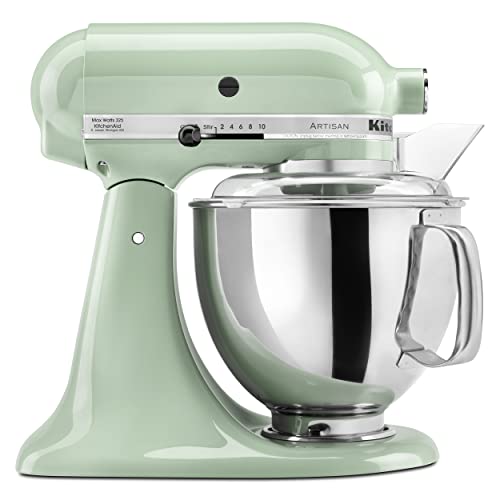
- Add the wet ingredient mixture to the dry ingredients in the bowl. Knead, ideally in a stand mixer, for about 15-20 minutes on low.
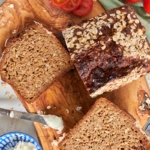
- While this sounds like a very long time, it gently releases the starches and pentosans (the natural ‘glues’ in rye), allowing the water to bind more effectively, helping to prevent the dreaded “flying crust” you can see in the picture on the topic above.
- It will be very soft and sticky, looking more like a thick banana bread batter than typical sourdough bread. This is working as intended.
- There is no windowpane test or similar with this dough. It’s also very forgiving when it comes to the fermentation time.
Transfer To Bread Pan and Overnight Fermentation
- Grease a standard 9×5-inch bread pan.
- Because of the long kneading time, I skipped the typical bulk proof and simply went ahead with the cold fermentation. You can add the bulk proof if you like. Whatever fits your schedule.
- Now you have 2 choices: If you know your bread pan is perfectly non-stick, just sprinkle it with some oats.
- If you are like me and are occasionally unlucky with sticky dough, line it with baking parchment. I show you some steps to do this neatly in the video.
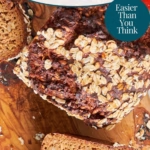
- Then sprinkle some rolled oats into the pan, to give your loaf the classic look.
- Transfer the dough into a greased/Lined bread pan. This works best with a rubber spatula.
- Your dough will come to the very top of your pan. That’s what you want, as it won’t rise very much.
- Sprinkle the top with some more oats.
- Cover with some cling film or a shower cap and allow to overnight ferment in the fridge.
Day 3 – Baking Your Protein Rye Bread
A Note on Scoring
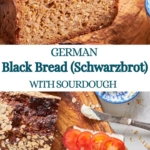
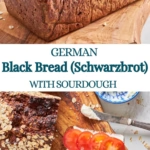
- A classic German Black Bread (Schwarzbrot) is usually not scored, but allowed to crack open naturally where it wants. This is what you see in the main pictures of the post and why it looks rather…wild.
- I did score my bread in the previous version, but felt it contributes to said possibility of “Flying Crust” as it “cuts” through the center and with that destabilises any crust that forms.
- Be aware though, due to the very high hydration, if you score, you’ll want to make a big and wide score, not a razor sharp one, as that will close within seconds.
- For this loaf, I went with poking it with a skewer a few times. And looking at the outcome, I’d say that worked quite well.
- The moral of the story: Try it out. Go with your preferences. And if the crust does come off a little? You just snack on it and pretend you wanted crustless slices anyway. That’s what I did anyay.
Bake Your Sourdough Black Bread
- Preheat the oven to 320°F (160°C).
- Take your Bread Pan out of the fridge. The dough should have risen a small bit, just about to the rim of the pan, but not as much as your classic sourdough bread by a long shot.
- Place a heavy-duty cast iron skillet or a stainless steel baking tray on the rack below where you’ll bake the bread for adding steam in the first 15-20 minutes. Avoid glass, as it can shatter when you add the water.
- Once you push your bread into the oven, add about 1 cup of water to the heatproof container you pre-heated in your oven and close the door. This will create steam to give the bread a bit of an initial burst of rising and later help the crust get crisp, but not overly hard.
- After about 30 minutes of baking open the oven door briefly, to let any potentially remaining steam escape and close the door again.
- Bake for about 130 to 150 minutes or until the bread reaches an internal temperature of 205°F (96°C).
- I usually rotate my bread about halfway through the baking, as my oven browns unevenly.
- If your crust looks like it might be getting too dark in the last 30 minutes (I know, hard to tell with this dark bread!) you can cover it losely with some kitchen foil. I usually enjoy the dark brown bits, as they are full of flavor!
Allow Your Bread to Cool. Really.
- Once baked, remove the bread from the oven and let it cool in the tin for a few minutes. Then transfer the bread to a wire rack to cool completely before slicing.
- And when I say “completely”, that’s at least 8 hours or, better, 24 hours.
- If you slice it too early, the insides may still be sticky, and it’ll be very tricky to get neat, clean slices.
- That being said: While for most breads you’d use a serrated knife, for this one you’ll want a sharp, straight blade to cut cleanly through the grains, without dragging them and breaking the slice. It may take a bit of practice to get those thin slices that are so classic for Schwarzbrot.
- You could always use an electric slicer (again, without serration), but not everyone has one of those.
- Contrary to your usual sourdough bread, this one gets better over the next days and lasts for up to 2 weeks in an airtight container.
- Enjoy your homemade German Black Bread with Sourdough!
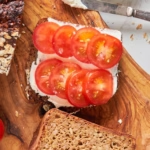
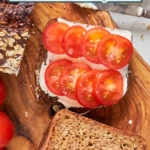
- I love mine with some cream cheese, a few slices of tomato and a sprinkle of Maldon salt. Alternatively, butter with a bit of molasses or German Beet Syrup is either breakfast or dessert!


Notes
The equipment section may contain affiliate links to products I know and love.
Tips and Tricks
- Don’t Skip the Soak: Your grain berries need that overnight soak to soften. If they go in dry, they’ll steal moisture from the dough, leaving the rest of the loaf crumbly and hard.
- Drain the Grains Well: After soaking, let the grains sit in a sieve for at least 10 minutes. Too much “stray” water is often what leads to excess steam and a separating top crust.
- Mix to Bind: Use a stand mixer or a sturdy spoon to mix the dough for a few minutes. We aren’t building a “gluten net,” but we are helping the rye’s natural starches bind with the water to create a solid loaf.
- Trust the Internal Temp: Because this bread is dark, you can’t judge it by color. Use a thermometer! When the center hits 205°F (96°C), the “rye glue” has set, and the bread is done.
- The 24-Hour Rule: I know it’s tempting, but do not slice this bread while it’s warm. The starches need a full day to settle and “cure.” If you cut too early, the inside will be sticky and gummy.
Tip:
- In some recipes I saw people carefully measuring the water they soak their grains in. I found, with the about 450ml (under 2 cups) you need, the grain is covered at first, but soon expands above the water, meaning you have some dryer and some wetter berries, leading to weird changes in texture and hard grains in parts.
- You could argue that different sizes of grain berries soak up very different amounts of water and you’d be entirely correct. I weighed differences of up to 1/2 cup/120ml when soaking different types of grains. But that’s where the core temperature at the end of baking comes into play. If your bread is at 205°F (96°C) the water has evaporated to the degree that gives this bread the ideal texture. You might bake a little longer or shorter, but it’ll still work beautifully with soft grains throughout the dough.
How to Store
- This Whole grain black bread keeps in an airtight container on your counter for up to 2 weeks. You can also store it in the fridge for about the same time.
- It freezes fabulously well in either a freezer bag or wrapped tightly into clingfilm, then kitchen foil.
- Either whole or in slices, separated by baking parchment, so you can grab one at a time.
- You can also toast it. This will intensify the lovely nutty flavor and re-crisp the crust in all the right ways.
- Prep Time: 40 minutes
- Fermentation/Grain Soaking Time: 16 hours
- Cook Time: 140 minutes
- Category: Bread, Breakfast, Side Dish
- Method: Bake
- Cuisine: German
Nutrition
- Calories: 146
- Sugar: 2
- Sodium: 257
- Fat: 4
- Saturated Fat: 1
- Carbohydrates: 24
- Fiber: 4
- Protein: 5
- Cholesterol: 2