
No-Knead Sourdough Protein English Muffins (10g Protein)

If you’ve ever tried adding protein powder to your baking, you know the struggle: you usually end up with something a bit dry and dense. These sourdough protein English muffins change that. By using a simple no-knead method and the natural moisture-retaining power of sourdough, you get a muffin that hits 10g of protein without losing those iconic nooks and crannies to collect the melting butter. They are chewy, tangy, and arguably better for toasting than a classic recipe.

This post may contain referral links for products I love.
For The Pleasure Of Eating earns a small commission on these links at no cost to you.
- Why You’ll Love This
- The Ingredients
- Substitutions
- Equipment Used
- How to Make this
- How To Store
- FAQ
- Other Recipes You Might Enjoy
Why You’ll Love This
TL;DR
- 10g of Protein: More than double the protein of a standard English muffin to keep you full until lunch.
- Easy No-Knead Method: No stand mixer or heavy labor required—just a quick mix and a few folds.
- Real Texture: No “protein-dryness” here; sourdough and cottage cheese keep the crumb soft and bubbly.
- Gut Friendly: Long fermentation makes the grains and proteins easier for your body to digest.
- Totally Flexible: The “life-proof” schedule works around your day, even if things get busy.
- Toasts Like a Dream: The milk sugars create a perfect, crispy golden-brown crunch.
Tastes Like Your Favorite English Muffin, But Has 10g Protein
If you’ve tried baked protein recipes, you probably came across the typical problem of a fairly dense and dry dough. That’s because the protein powder soaks up water like a sponge, which leaves the dough with too little to develop the craggy texture you know and love from English muffins.
In all my protein sourdough recipes, I use the starter to counter that dryness. It attracts and holds moisture, and tenderizes, making it the ideal partner for protein, by balancing the drying characteristics.
Another trick is to combine different protein sources, in this case whey concentrate and cottage cheese, instead of just using one, which in high concentration would lead to a wildly different (and rather dense) result. But with the mix we get up to over 10g protein, which is more than double the amount of the classic recipe, while maintaining the texture.
A bit more water added to the dough, making it slightly stickier than you might be used to (especially if you only tried yeasted English muffins before) and you get the perfectly risen, light and bubbly muffins that are so lovely for toasting the next day!
And with all that protein they do keep you fuller for longer. Which is what we all want, isn’t it?
Fabulous For Toasting
Whey protein and cottage cheese contain milk sugar, if only in small amounts. This sugar caramelizes easily when toasted, giving you a lovely deep golden brown when freshly frying the muffins, but also all those incredibly crispy nooks and crannies you love when toasting them the next day. So the nutrition additions, instead of taking pleasure away, add more of it.
Did I mention I don’t do compromise in the flavor and texture of my baked goods?
Why Should We Combine Sourdough And Protein?
I have written a whole post on the topic of sourdough baking with added protein, including the relevant links to studies and science behind it, but here is the gist of it:
- The sourdough starter contains and produces a wide variety of enzymes, including proteases. These proteases are enzymes that break down protein molecules into smaller peptides and individual amino acids, which our bodies can more easily absorb than their bigger counterparts.
- The process works both on protein within the flour and added whey protein in the form of powder and any other milk or grain products.
- This means you get more bang for your buck from the protein you are adding to sourdough when allowing it to long ferment.
- The added protein keeps you fuller for longer and reduces the carbs a little, as it replaces part of the flour.
And if that isn’t enough reason to try these muffins, you definitely want to for the flavor.
Easy No-Knead Method
You won’t need a stand mixer for this recipe or knead the dough for ages. A stir with a dough whisk to mix it and a few stretch and folds are all this high hydration dough requires to make fluffy and perfect English Muffins with lots of bubbles.

Flexible Overnight Method For Fresh Sourdough Muffins Anytime
One of the (many) benefits of sourdough is, that it’s so flexible when it comes to the timeline of baking it. Life gets in the way, we are all busy and honestly can’t schedule around sourdough. At least I can’t. How about you?
Which means I usually mix my starter one evening, then get around to making the dough at some point during the next day. Based on when that is, I either leave it to do the overnight fermentation right in the bowl I mixed it in or, if I managed to start earlier, shape them in the evening and allow them to ferment and rise in shaped form, having freshly fried Muffins for Breakfast.
Whichever you do, it’ll work.
While testing this recipe I had a handyman doing half a renovation of my house, my PC breaking down, a huge deep spring clean and multiple other hiccups. So for one batch I fried them the next day and they were great, but the next batch stayed in the fridge, shaped, for nearly 3 days. I was afraid they’d be hopelessly over proofed, but nope. They are what you see in most pictures here.
So while I will give you a bakers schedule, it’s only a rough timeline guidance. Longer always works. Shorter needs a little more attention and timing.
Ingredient Notes
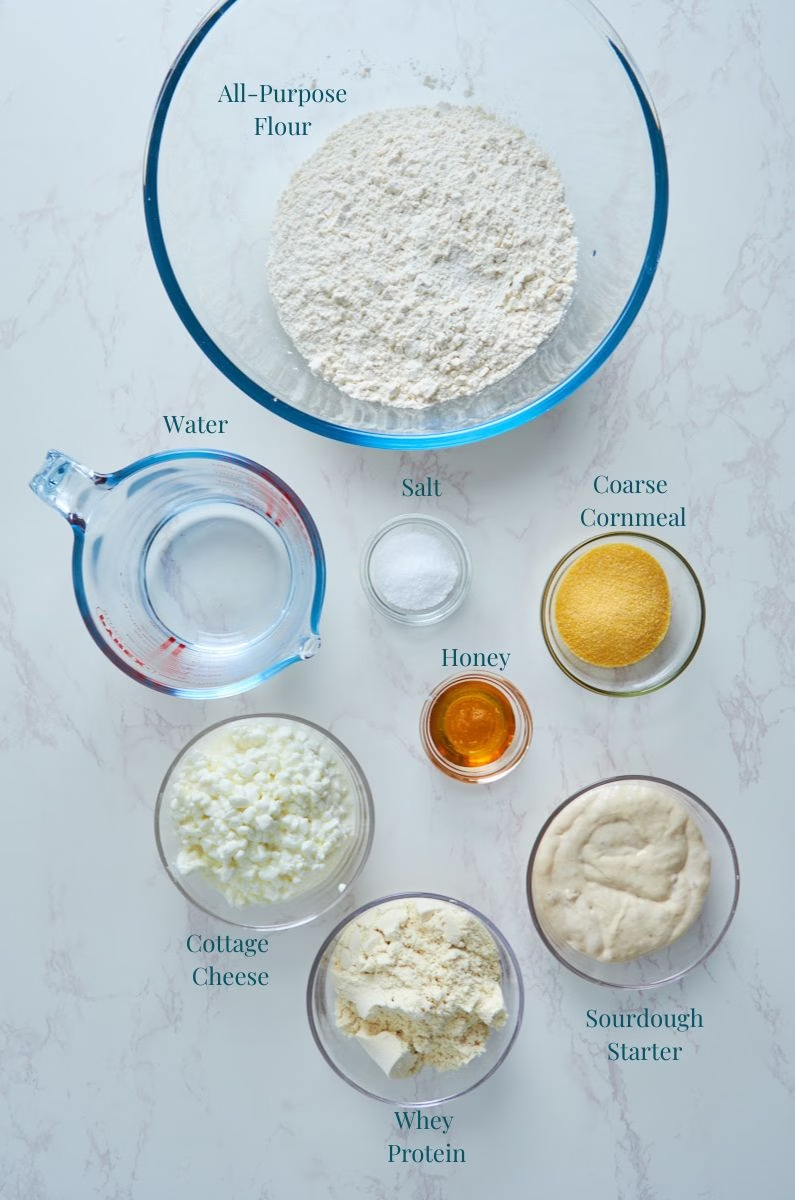
Dry English Muffin Ingredients
- All-Purpose Flour – I use all-purpose flour here for the classic texture and flavor, keeping the muffins very tender.
- Whey Protein Concentrate – Unflavored to be exact. Mine is from MyProtein.
- This is neither affiliated nor sponsored. Just the powder I found to taste best after trying a fair few. If you never found one you actually enjoy, give this one a try. Though any unflavored whey concentrate will work.
- Salt – Not only for flavor (though that’s of course important), but to control the fermentation rate and give it time to develop.
- I use Diamond Crystal Kosher Salt in all my cooking and baking. It has a very fine structure, so it has less saltiness in volume than, say sea salt (but the same by weight). If you use sea salt, use half the amount in volume than given in the recipe.
Wet English Muffin Ingredients
- Cottage Cheese – Mine is from Milbona, which I get at Lidl. It has only 2.8% fat yet comes with 12.5% protein and is lovely and creamy in texture when blended. Use any cottage cheese you like. It’ll be fine. This replaces the milk that is usually used in English Muffins.
- Sourdough Starter – If you have no starter yet, follow my recipe to make your own.
- You want it to be active and bubbly for the protein muffins. I’m using a slightly different feeding ratio of 1:7:6 these days, which keeps my sourdough active for longer, giving me more flexibility in my baking schedule and leading to a very strong starter. This ratio also leads to a less acidic outcome, which, in English Muffins is lovely, as you want them a bit more neutral tasting than, say, rye bread.
- Honey – Just a little, to balance the flavor of the cottage cheese and sourdough. You want the tanginess, but this little bit of sweetness makes them utterly moreish.
substitutions
Dry English Muffin Ingredients
- All-Purpose Flour – You can absolutely use bread flour 1:1 here. It will give you a slightly sturdier texture.
- If using gluten free flour, you’ll have to add psyllium husk powder to get similar results. About 27g on 500g gluten free flour should be a good starting point.
- Note: I used the calculation from “The Loopy Whisk” and her fantastic gluten free bread recipe.
- I have yet to try this myself (it’s planned), so I’m not entirely sure it’ll come out perfect, but going by my Gluten Free Pistachio Cookie results which I made based on one of her recipes too, it should be pretty good.
- You can also replace about 1/3 of the white flour with fine whole wheat flour without sacrificing much of the texture but might have to add a little more water.
- Whey Protein Concentrate – Casein powder works well, but needs about 1-2 tbsp added water. So does upcycled (unflavored) Barley protein, which needs 1-2 tbsp less water.
- I have not tried to bake with any pea based vegan protein powders, as I deeply dislike the flavor and texture of them to begin with, so I’d rather not have them in my baked goods. If you give it a try, please tell me what you think! You’ll likely need to add 1-2 tbsp water, as they do soak up more than whey concentrate.
- I would not recommend using whey isolate, as it has a much stronger drying effect. It lacks the fats found in concentrate, which leads to a much thirstier, tougher dough.
- If you’d like to make this recipe without protein powder, simply replace 1:1 with more flour. Start with about 2-3 tbsp less water, as protein powder absorbs more than flour.
Wet English Muffin Ingredients
- Cottage Cheese – Low or 0% fat Greek yogurt will work as substitute. A vegan version of it should too, though I didn’t try that one personally, as the ones we get here all taste weirdly sweet. Check the ingredient list, to make sure yours has no added sugar.
- Sourdough Starter – Now in theory you could make these muffins with instant yeast. Replace the amount of sourdough with 50g flour, 50g water and 1 tsp instant yeast. Your rising and fermentation time will be about halved. You can still do a cold ferment in the fridge overnight though and it’ll improve even a yeasted dough’s flavor. You may have to add a little more flour if using only yeast, as it can’t handle the amount of moisture sourdough can.
- Honey – Replace with maple syrup or even sugar. As it’s such a small amount, there won’t be much difference in texture.
Top Tips for Success
- This is a high hydration dough, so it will be pretty sticky even when shaping. Do the stretch and fold with wet hands, to prevent dough fingers and only use a little flour during the shaping process. The cornmeal will coat both sides enough to make them easy to transfer to the pan and not stick to it. This hydration is what gives you all those nooks and crannies we love in classic English muffins!
- I often say don’t apply yeasted dough logic (“knead until it doesn’t stick anymore and comes away from the sides of the bowl”) to sourdough. The two are very different in hydration and handling. Sourdough will always be a little stickier. Think of the goal texture as Jello-like. It should jiggle in the bowl when it has risen.
- While you absolutely can roll out the dough and cut out the English muffins, I found they come out much more evenly and fluffy when you shape them like you would a bun. The surface tension gives you a more polished look and bubblier insides.
- The frying may need a little bit of practice as every stovetop is different. While I used mainly my built in induction stove, which worked great at exactly setting 5 out of 9, but had them brown too fast at setting 6 and not brown at all at 4, managing them on the induction plate I have for filming proved decidedly trickier! It didn’t seem to have a setting right between too fast and “simply not hot enough”. So I settled for faster and a bit deeper browning in the video, but you see the perfectly fried version from my built in stovetop in the photos.
- Generally start with a pretty low setting. If you don’t have any browning after 9 minutes, go one step higher.
Equipment Used
- Blender – While I use my Nutribullet to get the cottage cheese really smooth, you could certainly use the food processor (the small bowl in that case) for this step. I find mine a bit too large though, leaving too many curds intact for my liking.
- Large Bowl – For the remaining dough mixing steps
- Danish Dough Whisk – Fantastic for mixing sourdough and my personal tool of the year after getting one in last year.
- Sheet Pan – For the final rise after shaping
- Non-stick Frying Pan or cast iron skillet with (reasonably) fitting lid – I used my beloved LeCreuset non-stick pan, which has lasted me now…uhm…6 years I think? I’ve never had a non-stick pan that lasted longer than 2 years, so I’m impressed! Lid wise, I have a glass lid from some other pan that has long landed in the bin which fits reasonably well. Not perfect, but good enough for the purpose.
- Instant read thermometer – I found this to be incredibly useful, as the frying method means you can accidentally overcook the outsides while the insides are still raw. The thermometer takes away any guesswork.
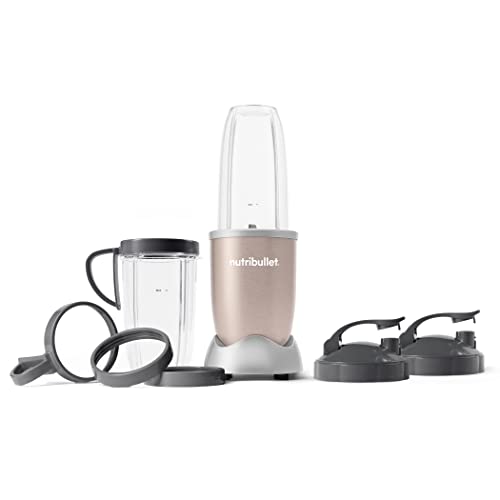 Buy Now →
  Buy Now →
  Buy Now →
  Buy Now →
 How to Make this
Example Baker’s Schedule
| Time | Action | Note |
| Day 1: 9:00 PM | Feed Levain | Mix your starter. Let it sit at room temp overnight. |
| Day 2: 9:00 AM | Mix Dough | Mix wet ingredients with flour, salt, and starter. |
| 10:00 AM | Stretch & Folds | Perform 3–4 sets of folds every 30 minutes. |
| 12:00 PM | Bulk Ferment | Let the dough sit undisturbed (Counter). |
| 6:00 PM | Shape Muffins | Shape and place on a parchment covered and cornmeal sprinkled sheet pan. |
| 6:30 PM | Cold Proof | Put the sheet pan in the “plastic bag tent” or cover with plastic wrap and into the fridge. |
| Day 3: 8:00 AM | Fry | Pre-heat a dry non-stick pan and fry your muffins |
Day 1 – Feeding Your Sourdough Starter (Levain)


- Using 15g (about 1 tbsp) of your existing starter (Levain Method), feed it with 60g (1/2 cup) flour and 50ml (just under ¼ cup) water. Leave it loosely covered overnight until it has doubled in volume, is active, and bubbly.
- If you have no starter yet, here is a link on how to make your own. You just need water, flour and a few days.
- How strong your starter is depends on your flour. Use good quality flour to feed it for best results. The consistency should be like very thick, stiff pancake batter.
- How long your starter will take depends on the temperature of your house. In winter it might need longer, in summer significantly shorter.
- To determine if it’s ready check if it has doubled in volume, is actively bubbling, you see nice, strong gluten strands if gently pulling it away from the walls of the jar with a spoon.
- If yours seems too runny, add a bit more flour, until it gets harder to stir and leave for a few more hours.
Day 2 – Mixing The English Muffin Dough/Bulk Proof
Mix The High Protein Dough
- Check if your sourdough starter is ready by adding a dollop of it to the water. If it floats and is nice and bubbly, it’s ready. Ideally it should just have formed a bit of a dome in its jar, when at peak activity. Though if it just collapsed a bit you’ll be fine too.
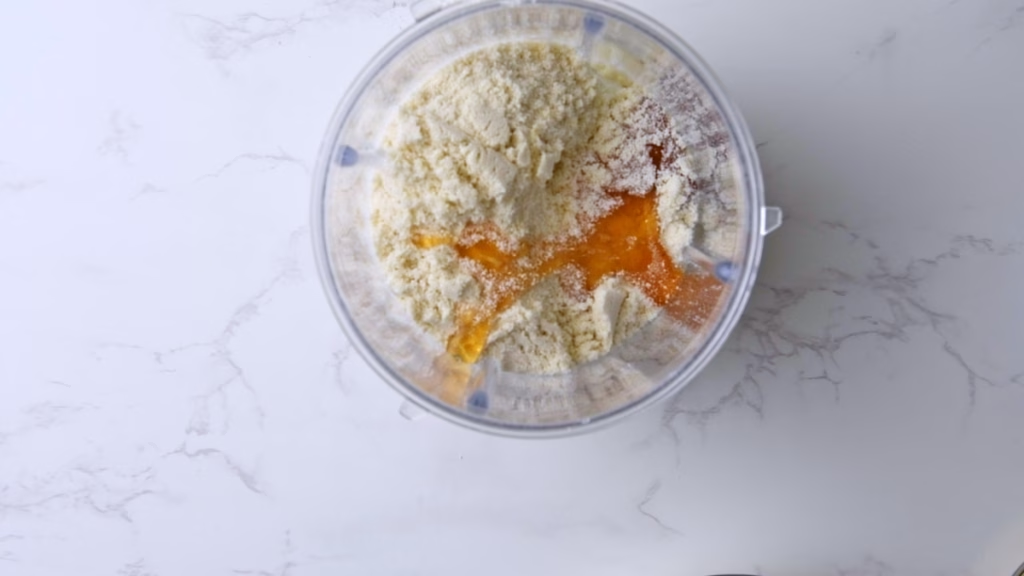
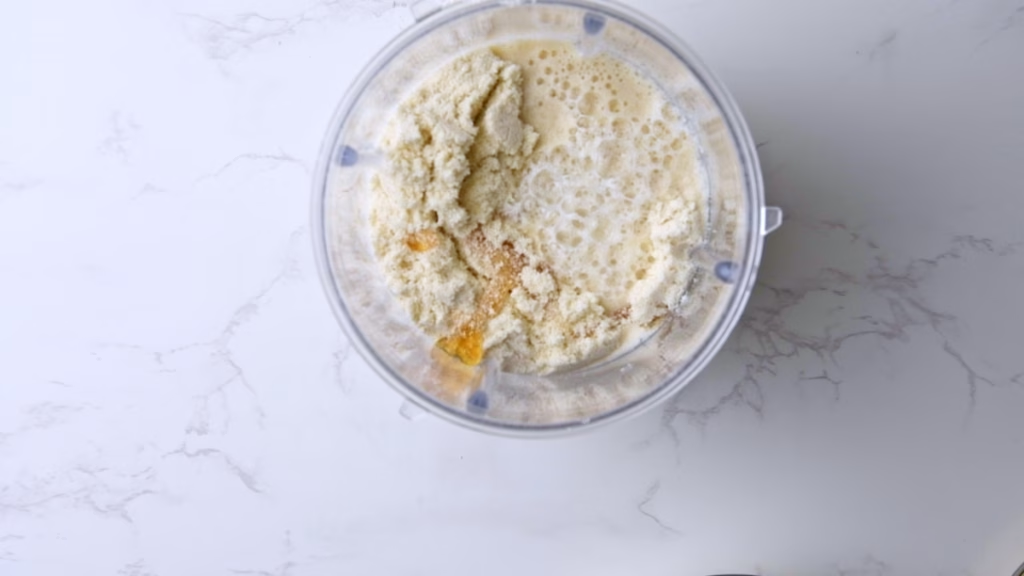
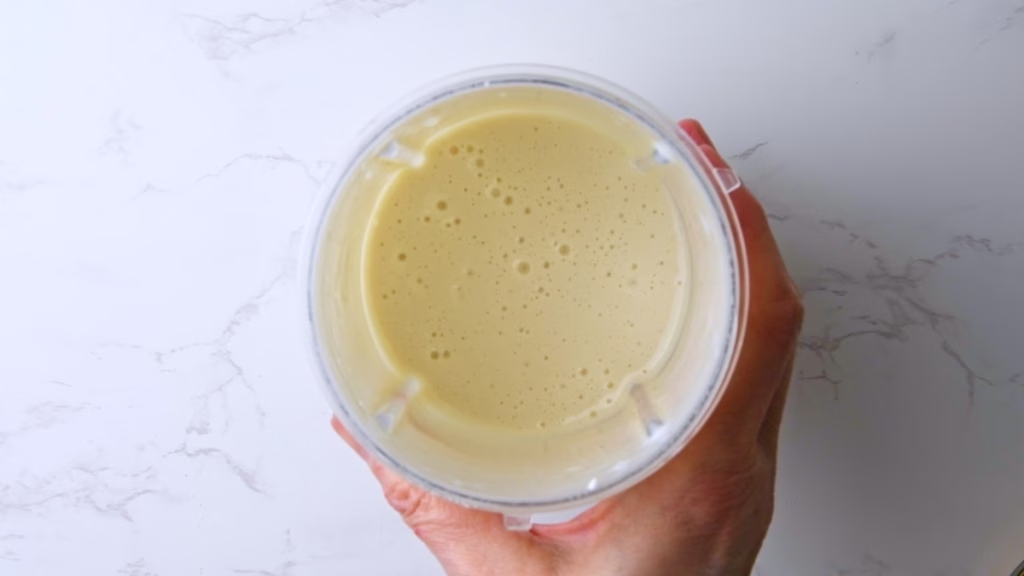
- Blend the cottage cheese, honey and protein powder with the water until smooth.
- Add the cottage cheese-protein mix to the sourdough starter and stir until combined.
- In a large bowl mix the salt into your flour.
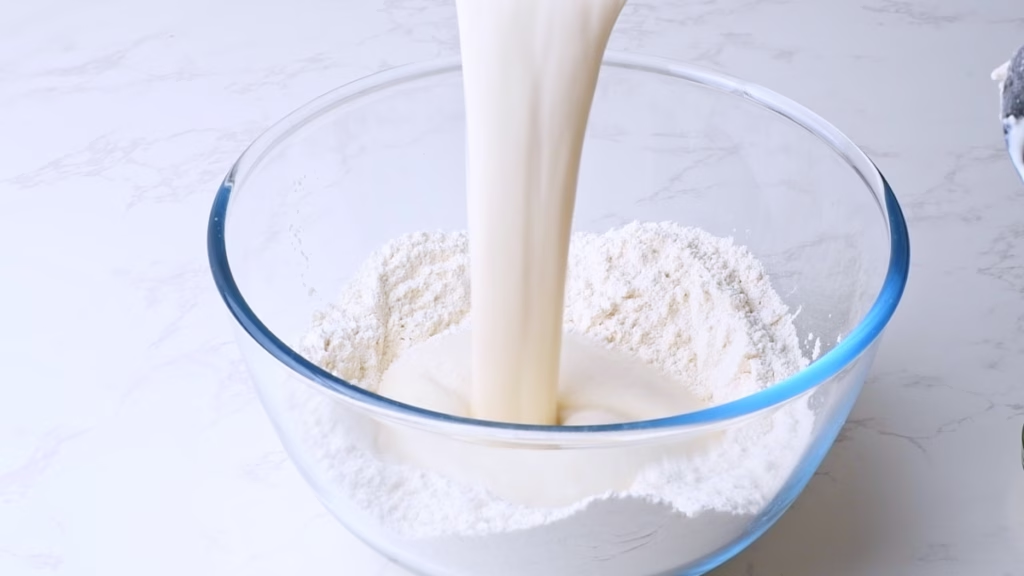
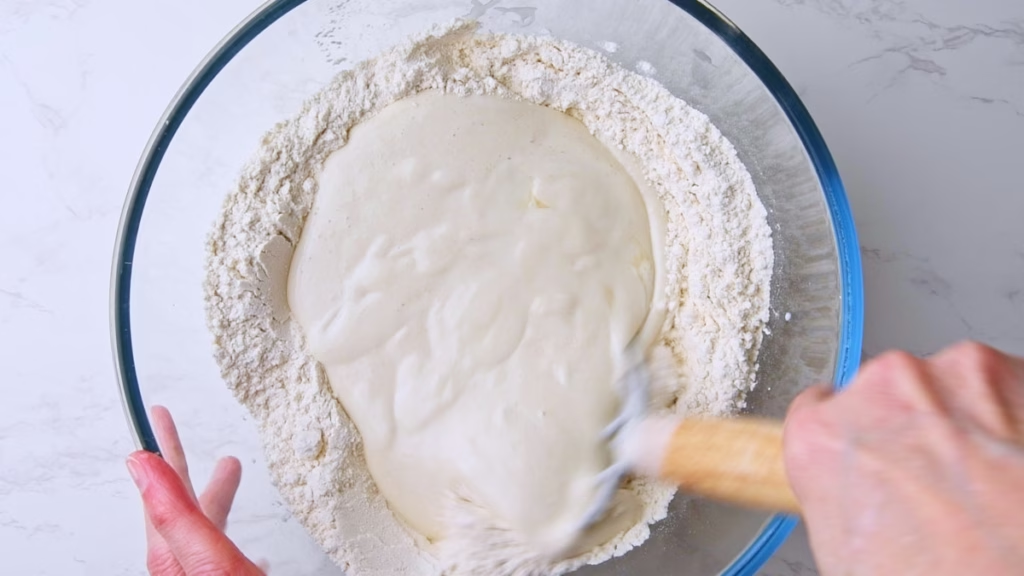
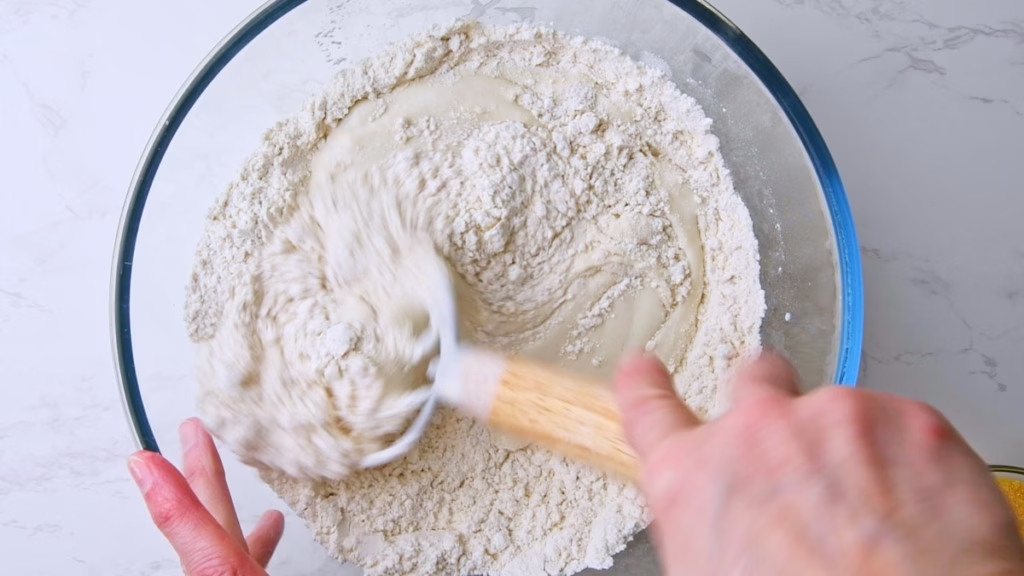
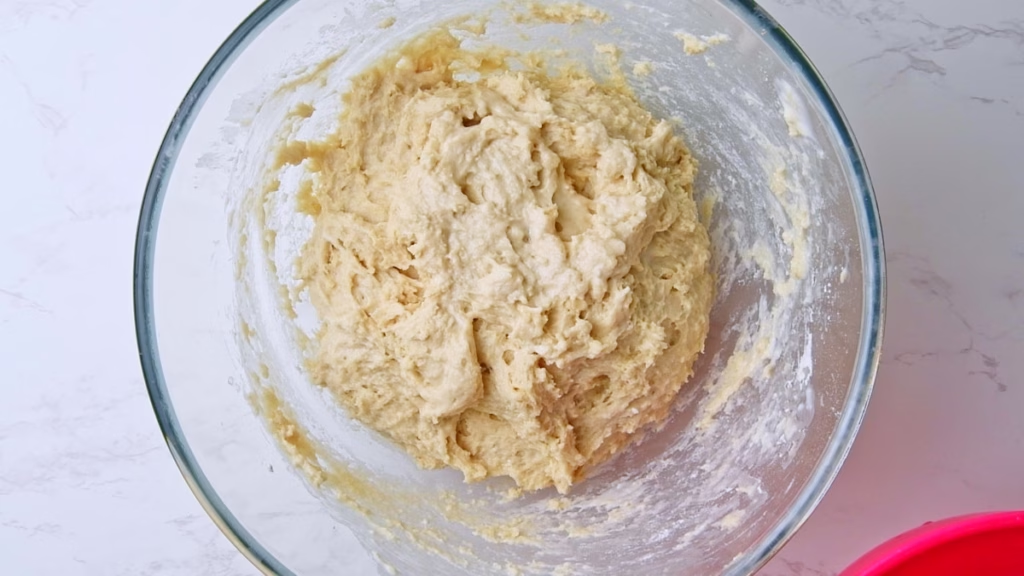
- Pour the liquids into your flour and stir until you have a shaggy dough without any dry flour bits.
- Your dough will be very wet and sticky at this point. Don’t add more flour. This is working as intended.
- Cover with a lid, plastic wrap, a shower cap or a damp tea towel and let it sit for about one hour.
Stretch And Fold
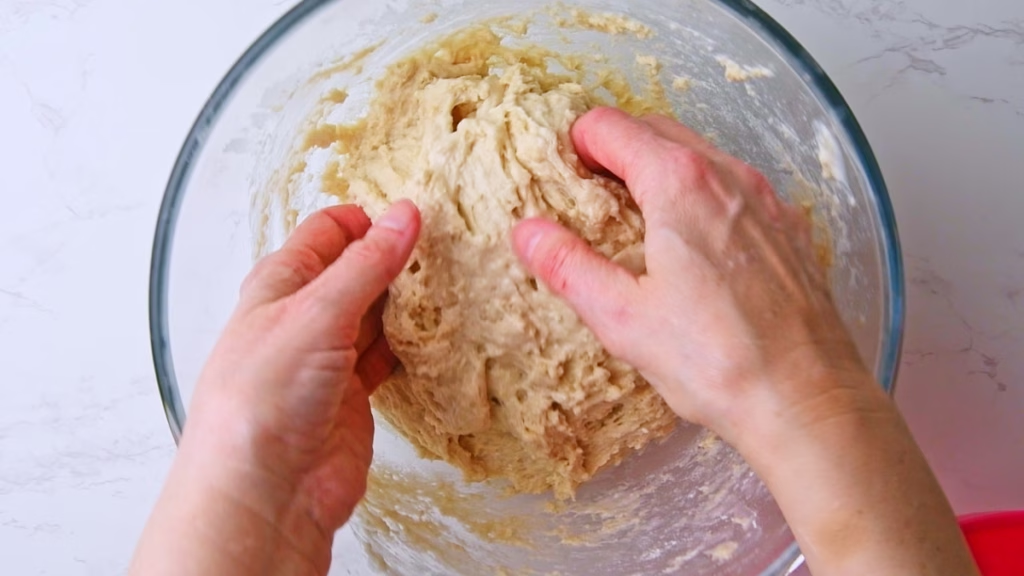
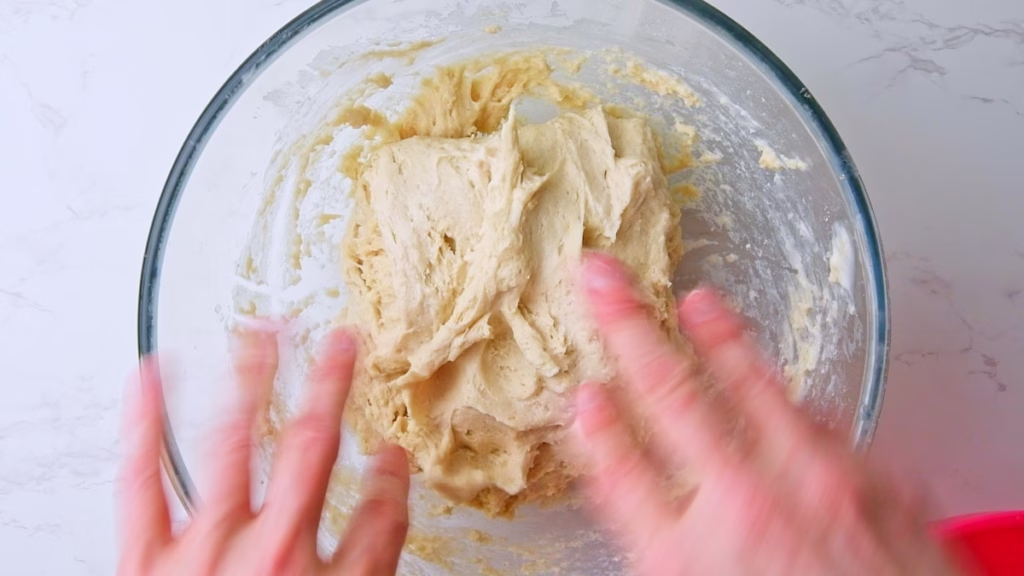
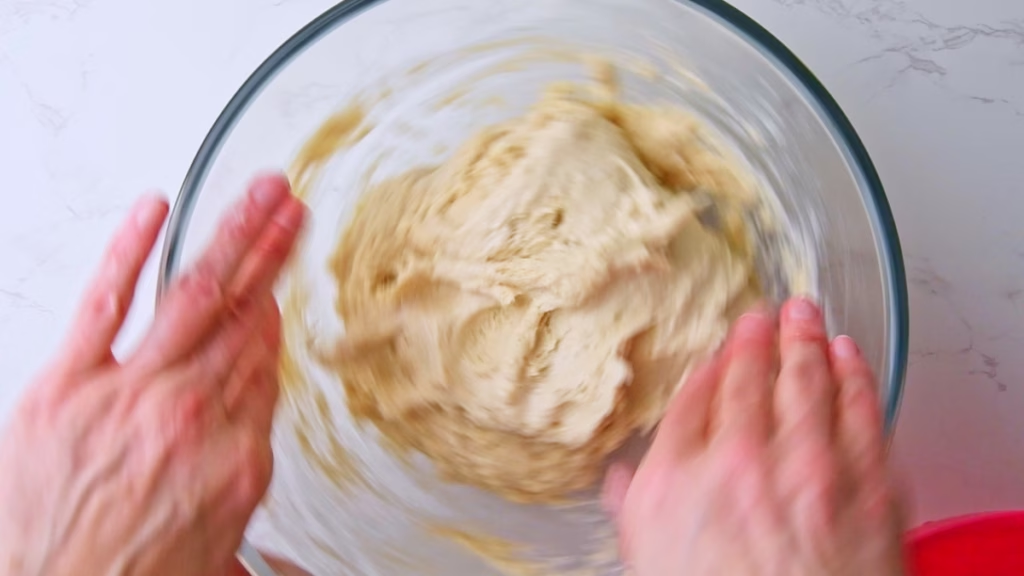
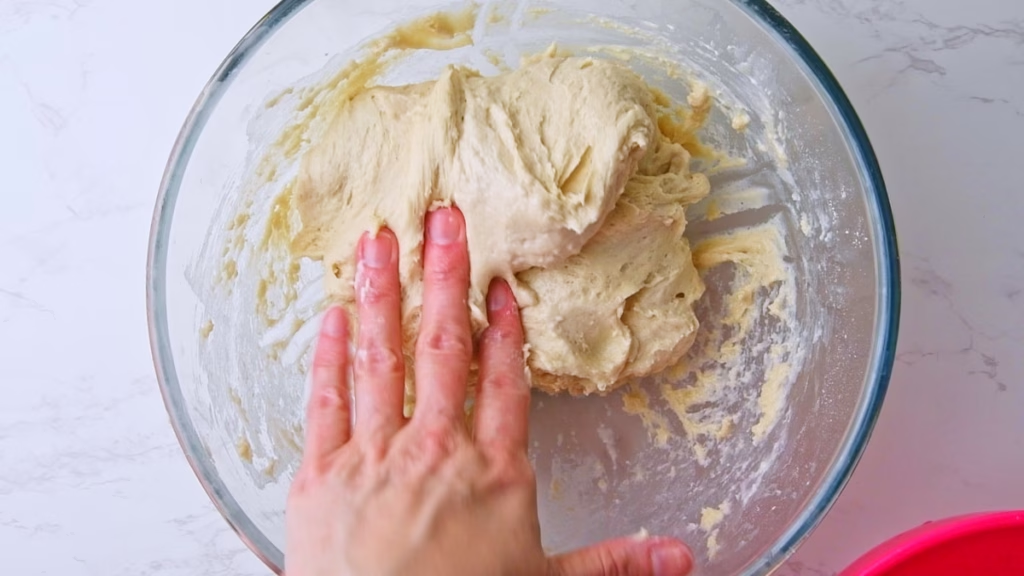
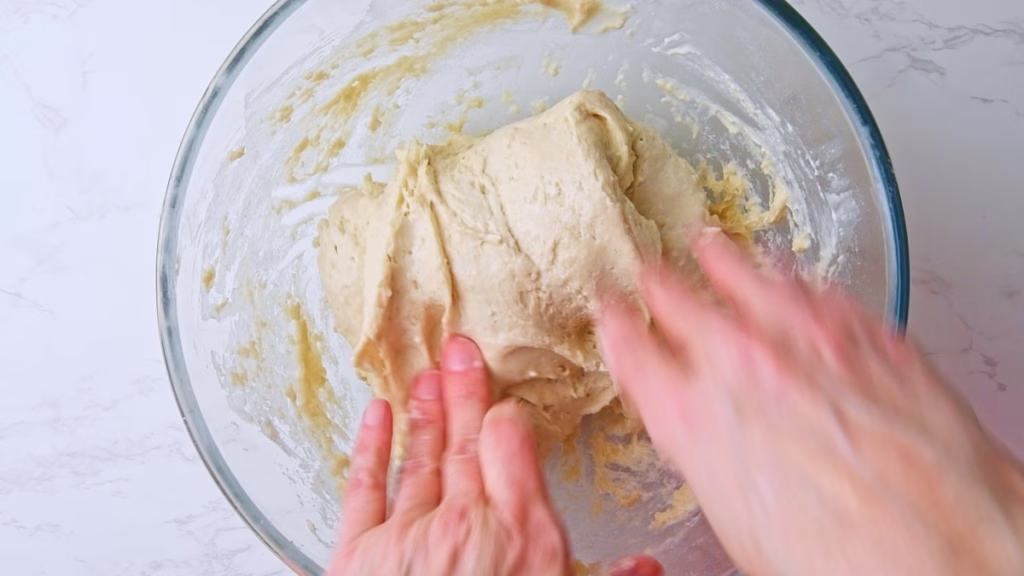
- After the first hour, start a series of 3-4 stretch and folds.
- To do this without too much dough on your fingers, wet your hands lightly.
- Push both hands under the dough, pulling it upwards. Then fold it over itself.
- Turn the bowl 90 degrees and repeat. Do this 4 times until the bowl returns to its starting position and the dough is visibly smoother and stronger.
- Repeat every 30 minutes to 1 hour for 2-4 times or until your dough looks smooth and strong.
Bulk Ferment
- Allow your protein muffin dough to bulk ferment on the counter for 4-6 hours or until it looks visibly risen and puffy. You should see little bubbles on top and if you used a glass bowl, even more on the sides.
Overnight Fridge Ferment
Now you have two options:
- You can cover your dough and store it in the fridge overnight for a slow fermentation (8-12 hours, or even up to 3 days if you prefer a stronger sourdough flavor or life gets in the way of baking) and shape about 2-3 hours before you want to fry your English Muffins.
- Or you can do what I did and go straight to the shaping, allowing them to overnight ferment while shaped.
Shaping The Protein English Muffins
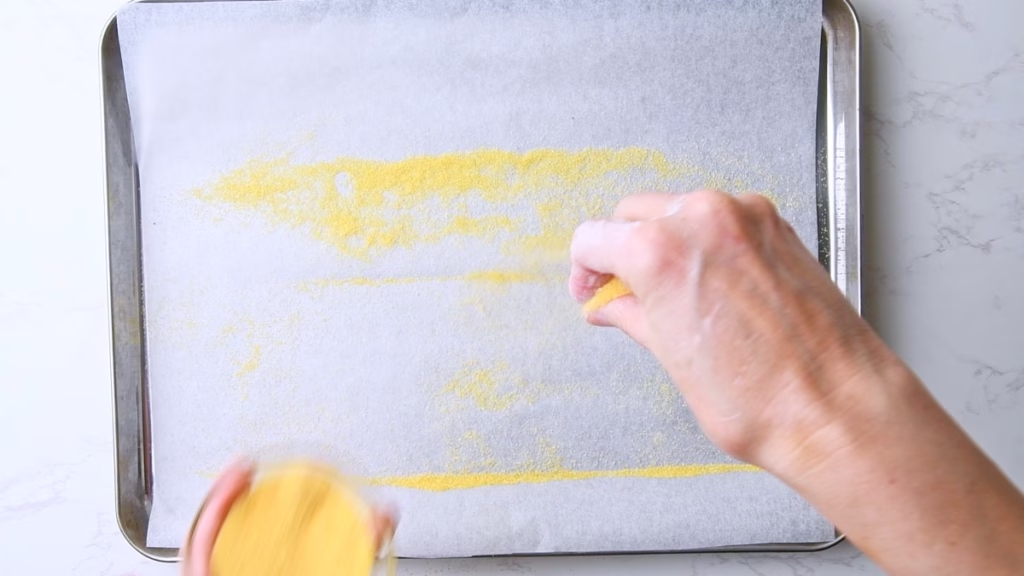
- Line your sheet pan with baking parchment and sprinkle with about 2 tbsp cornmeal.
- After the overnight fermentation (or right after the bulk ferment, if you want to fry them first thing in the morning) take your dough out your bowl using a dough scraper onto your floured worktop.
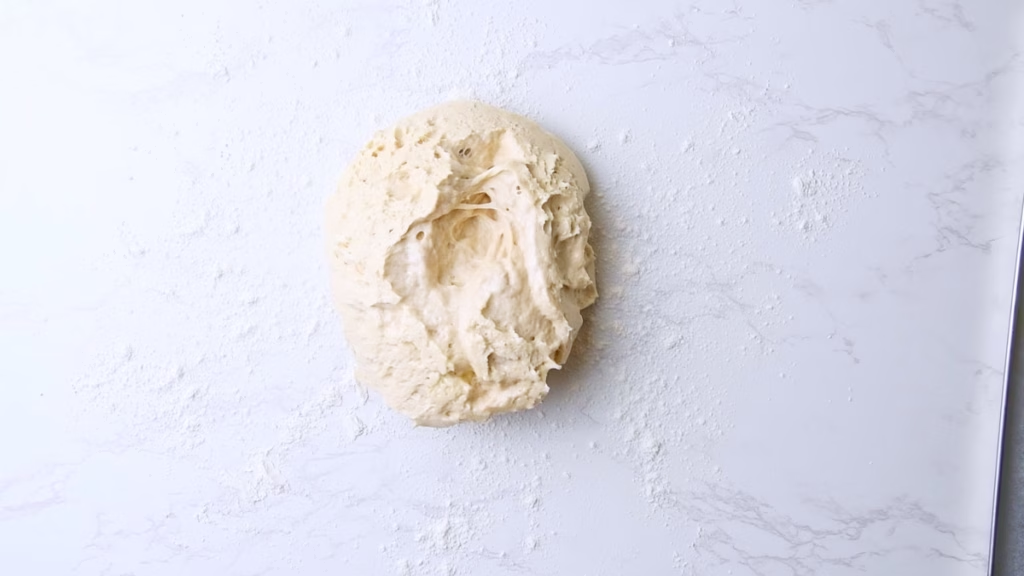
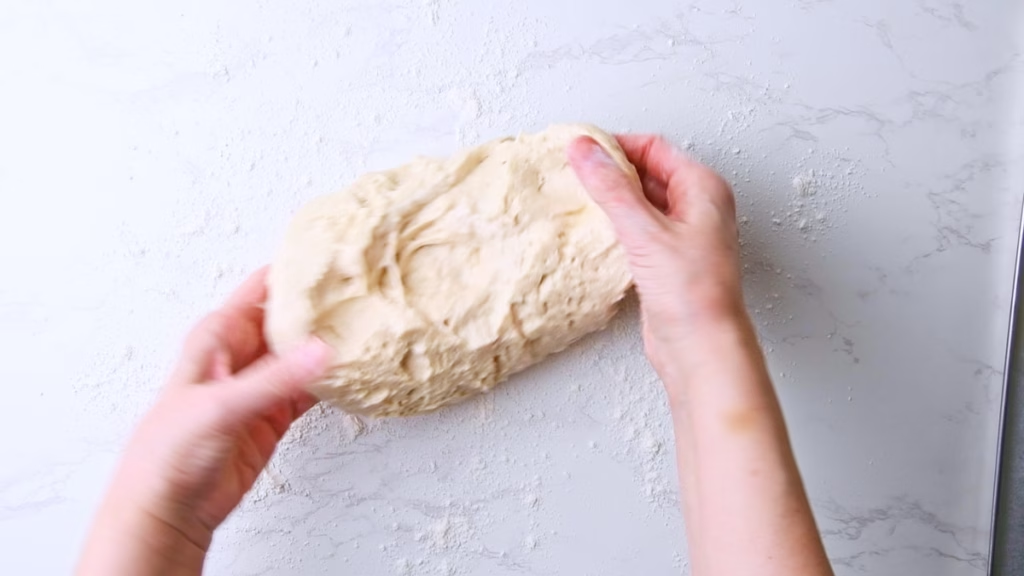
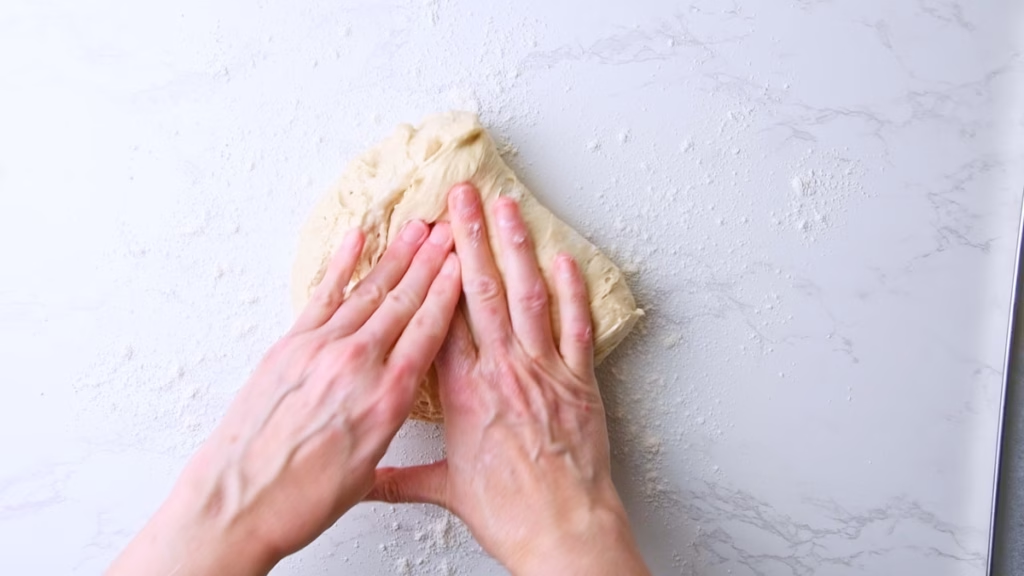
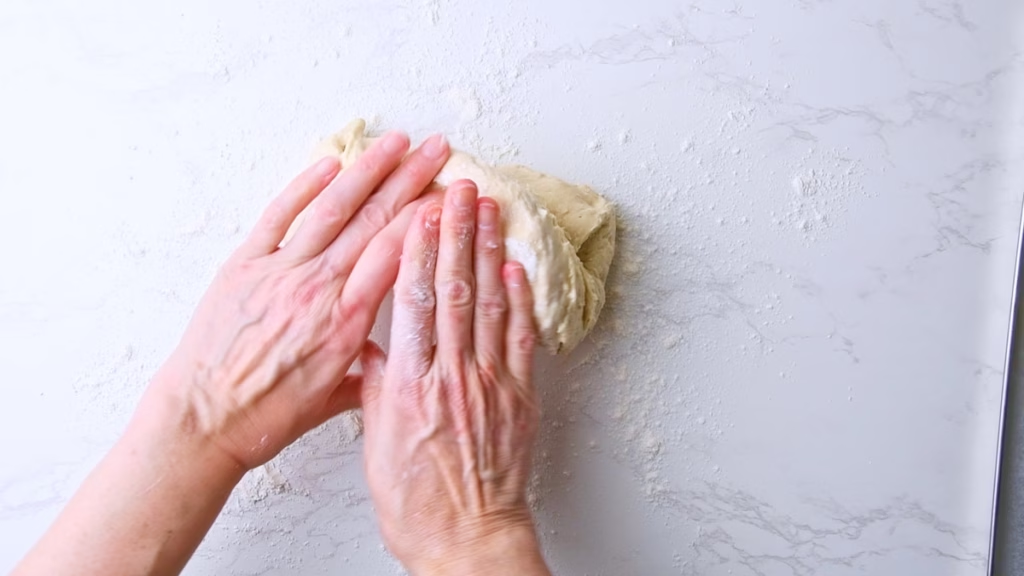
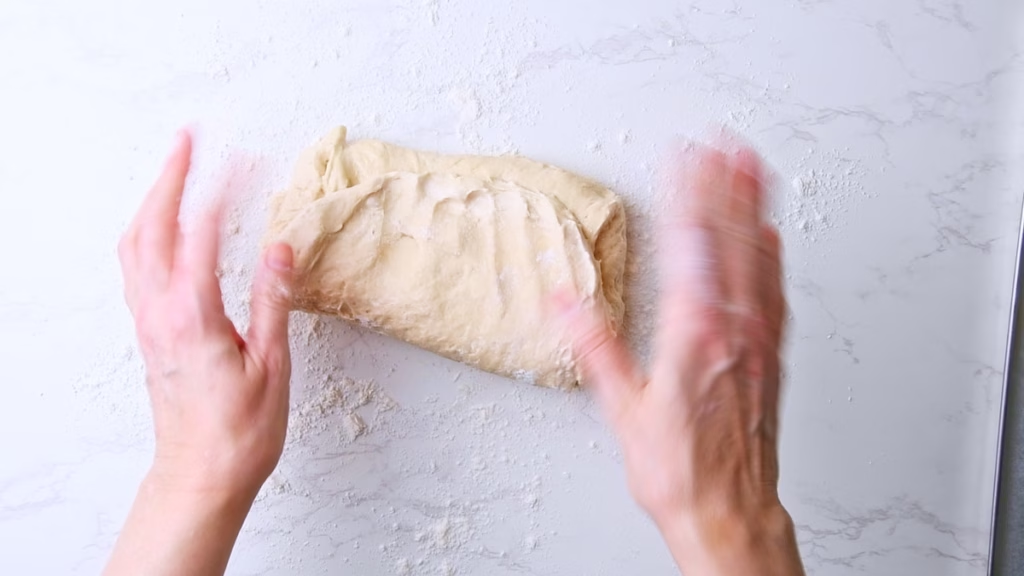
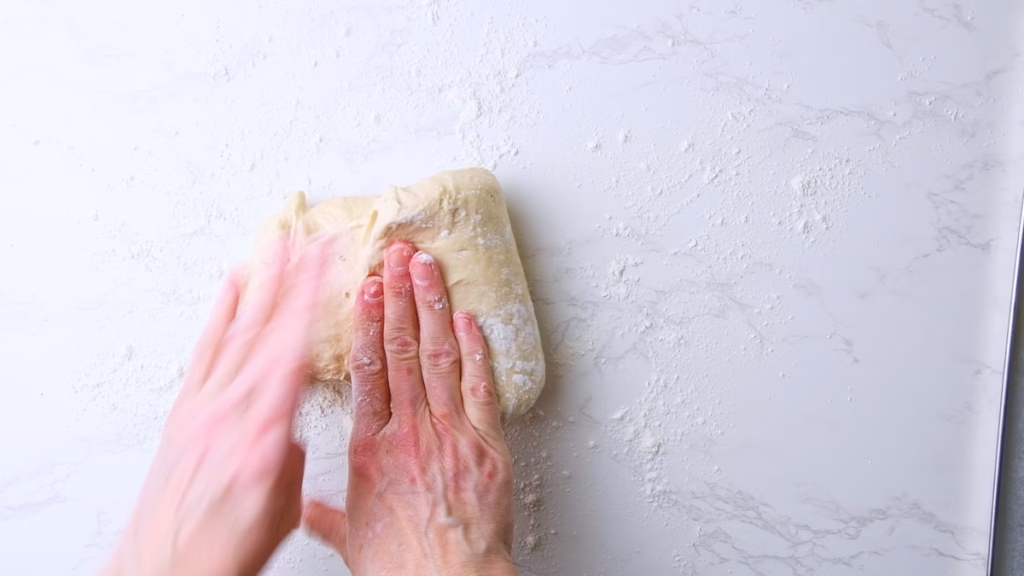
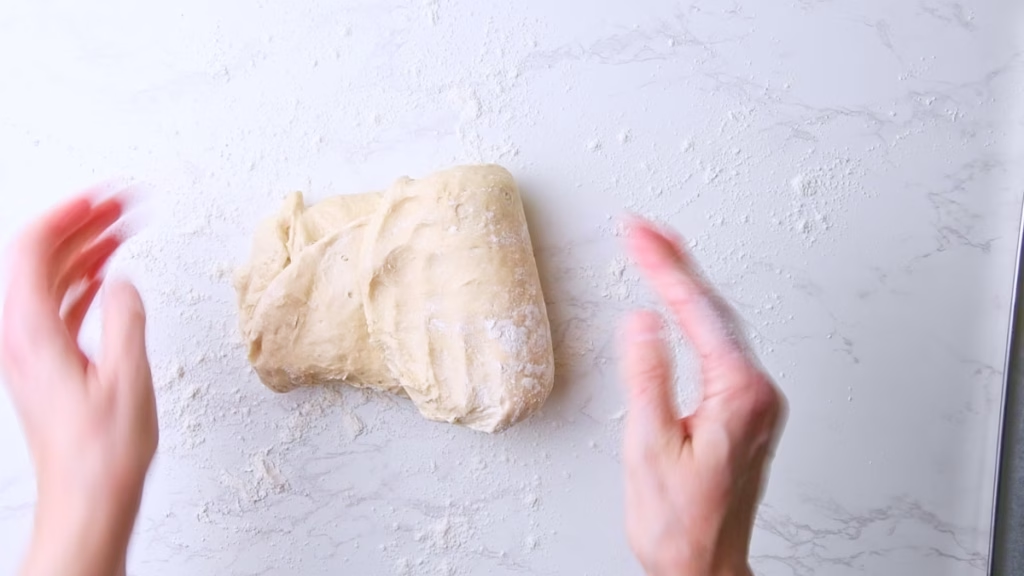
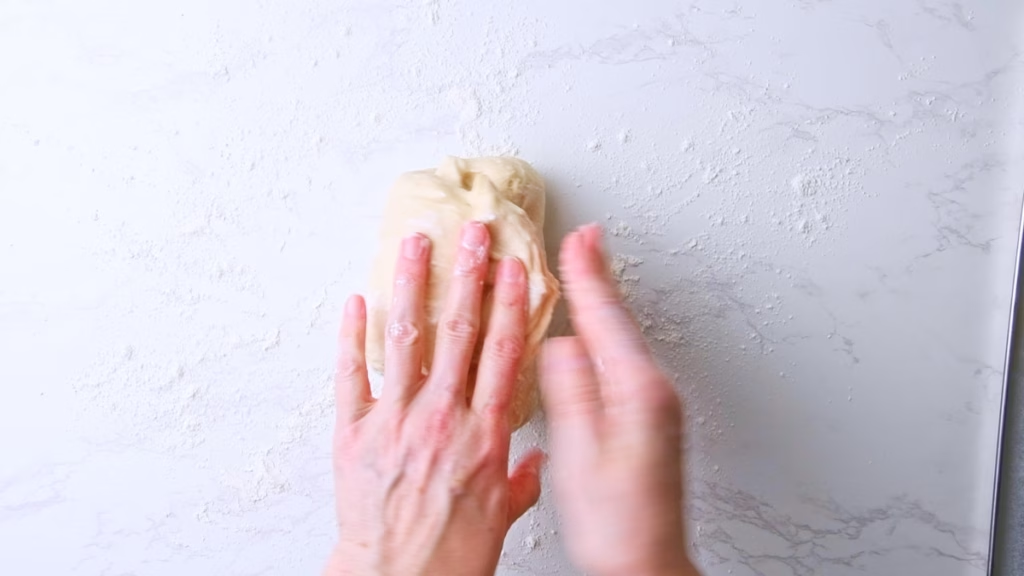
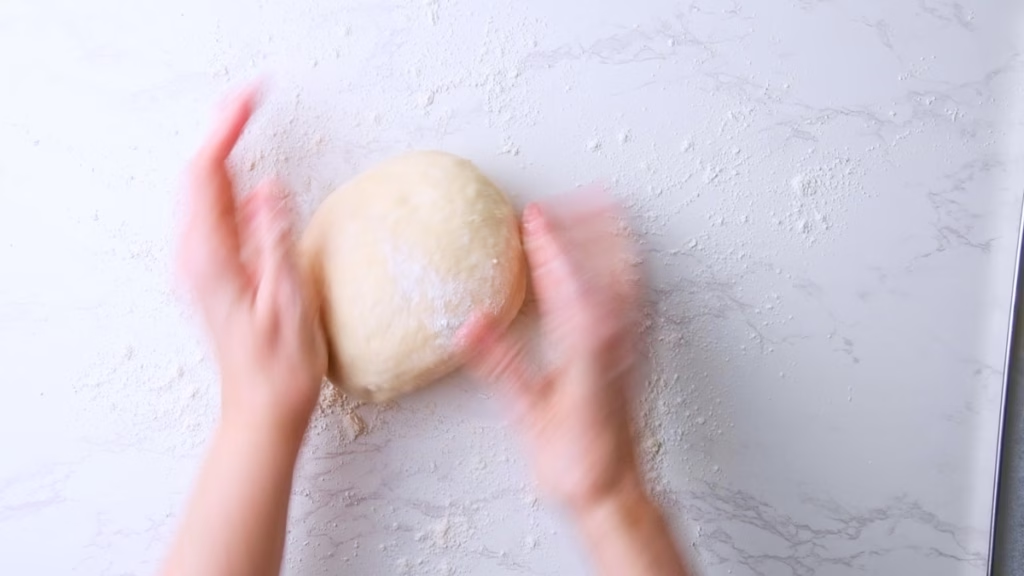
- Shape it into a neat ball by doing a “letter fold” to start giving it a bit of tension. For that, stretch the dough gently into a rectangle, fold one third over the center, then the other, essentially ending up with something like a very rough letter shape.
- Then fold it again starting from the short ends, until you have a square with a good bit of surface tension. Pushing the side of your hand or your dough scraper underneath it while rotating against the work surface, shape into a ball. This doesn’t have to be perfect.
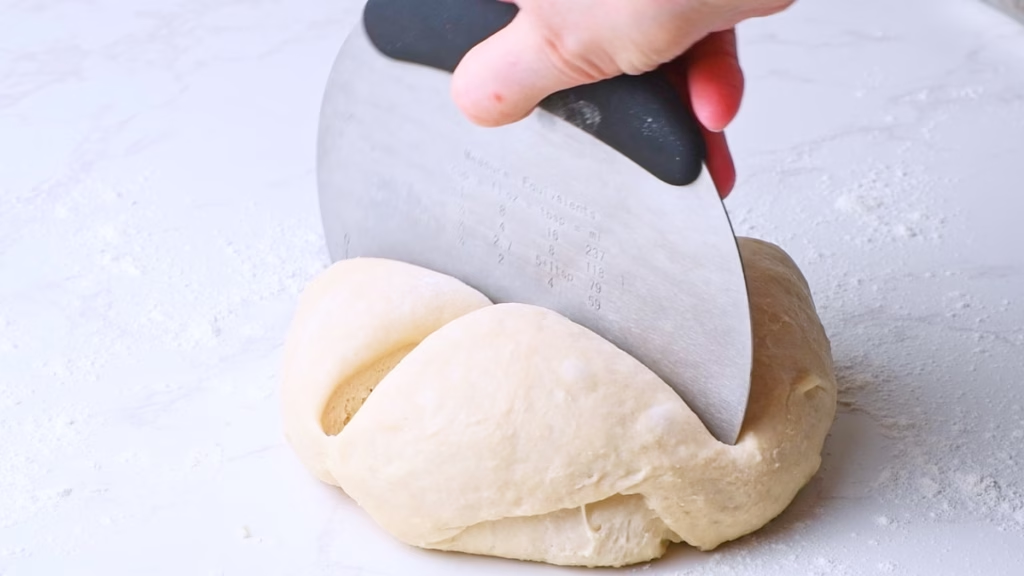

- Use your dough scraper or knife to cut it in half, then quarters, then eight pieces.
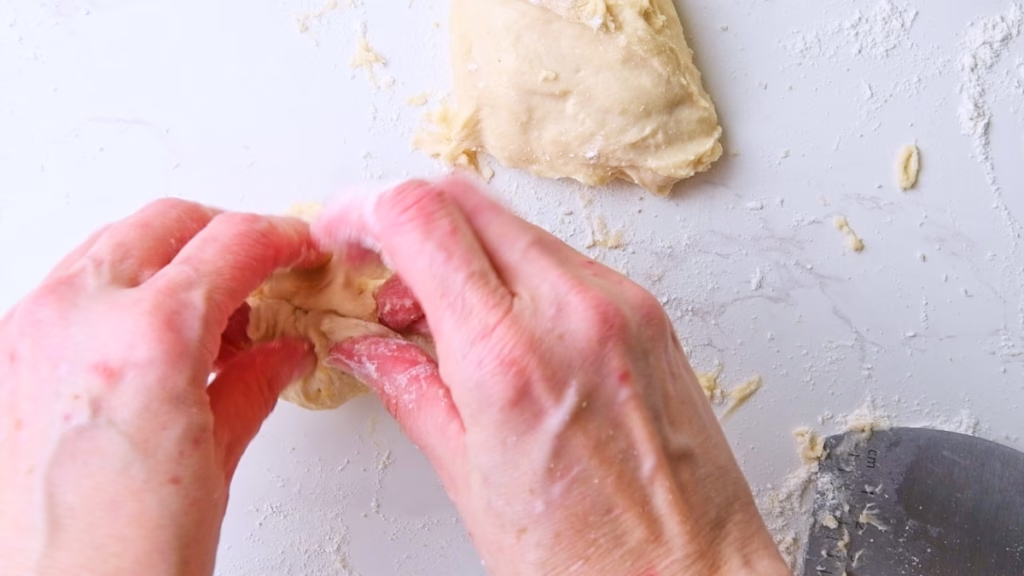
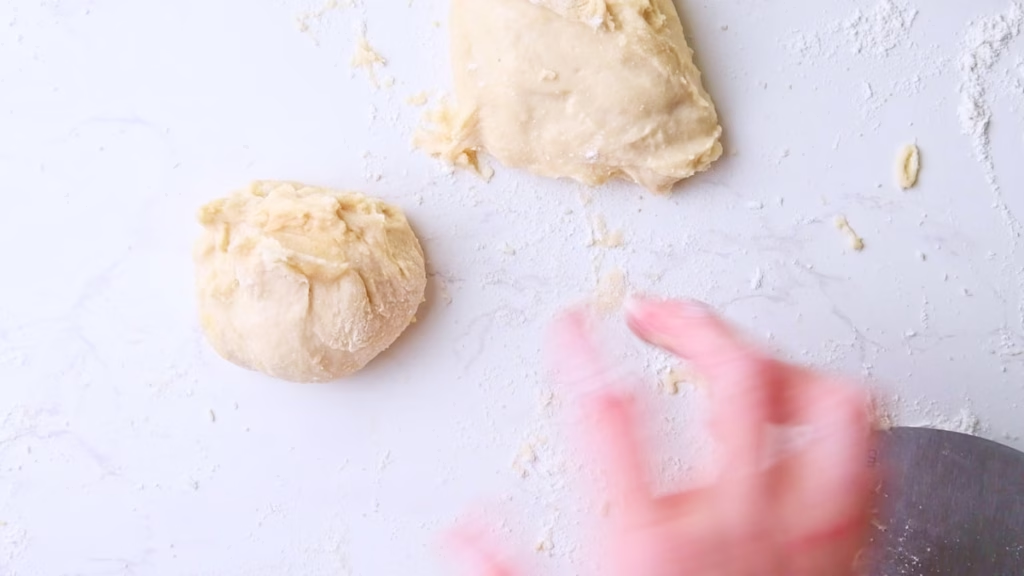
- Pat each portion down gently with your fingertips, then grab the corners and pull them up, creating a sort of bag/dumpling shape
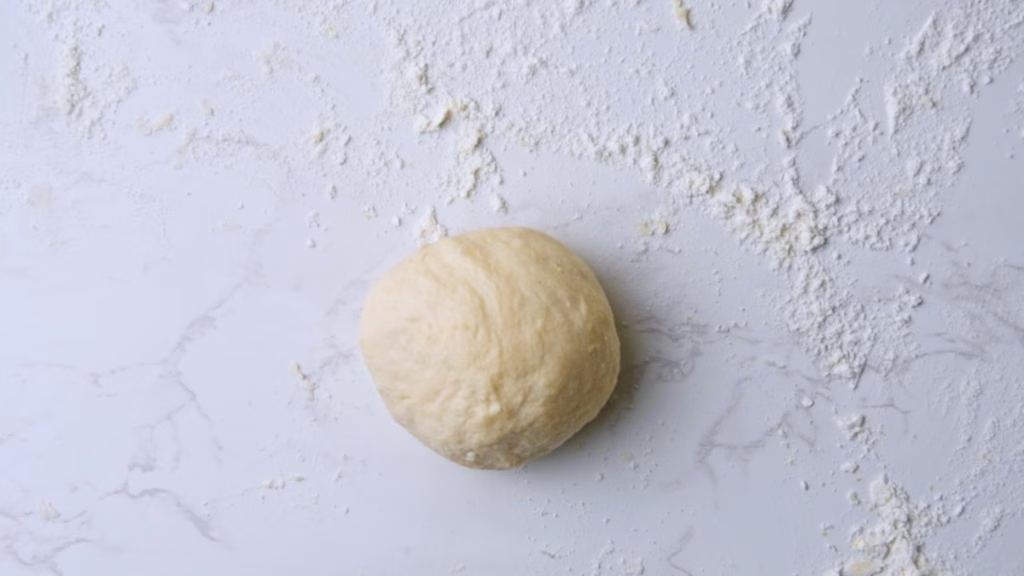
- Turn it seam side down on your hand or work surface (very little to no flour, so it can get traction), cup your other hand over it and start rotating in small circles until you have a neat ball and the seam at the bottom is mostly closed.


- Gently place the shaped muffins, seam side down, on your cornmeal sprinkled baking parchment. Leave a little room between them, as they will puff up a fair bit. I got all 8 onto one sheet pan.
- Sprinkle the tops with the remaining cornmeal and gently flatten them a bit with your palm.
Cold Ferment/Last Proof
- I put my sourdough protein muffins in the fridge overnight at this point and since I don’t want them to dry out and form a skin, which might bake into a very hard crust later, I use a bit of a trick to keep them moist and in perfect shape while giving them time to rise.
- I found towels decidedly too drying (even when damp) and frustratingly sticky and plastic wrap, no matter how carefully I tried to seal it always had air gaps, leading to dry bits plus was too tight to give my sourdough enough room to expand.
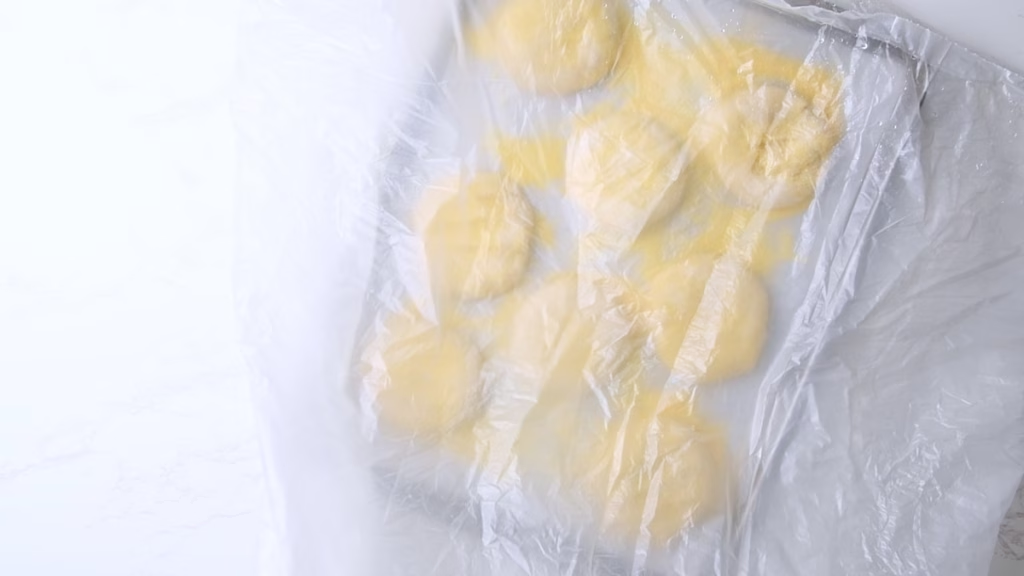
- Hence I started using (clean) large plastic bags, which works marvellously!
- Push said sheet pan into a large clean plastic bag, blow a bit of air into it, so it puffs up over the muffins and close it with a clip or knot, to get a relatively airtight seal.
- Move into the fridge and allow to cold ferment/proof for at least 8 hours, to get the full flavor. Up to 3 days works perfect, after that they start to deflate a little.
Day 3 – Frying Your Sourdough English Muffins


- Pre-heat a non-stick frying pan that you have a lid for on low heat. My ideal induction stove setting was 5 out of 9, but you might have to experiment a little to find the exact right one on yours.
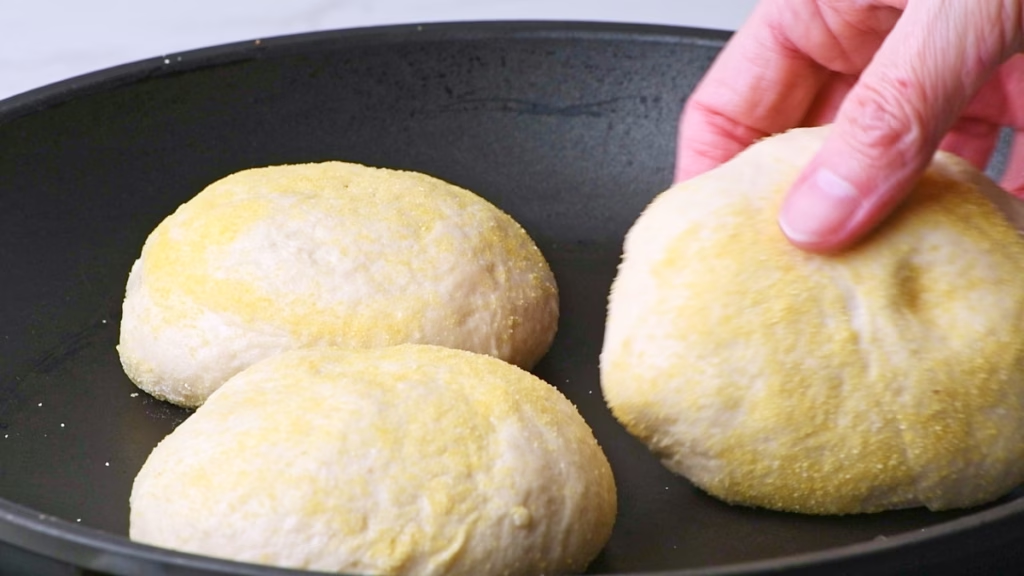
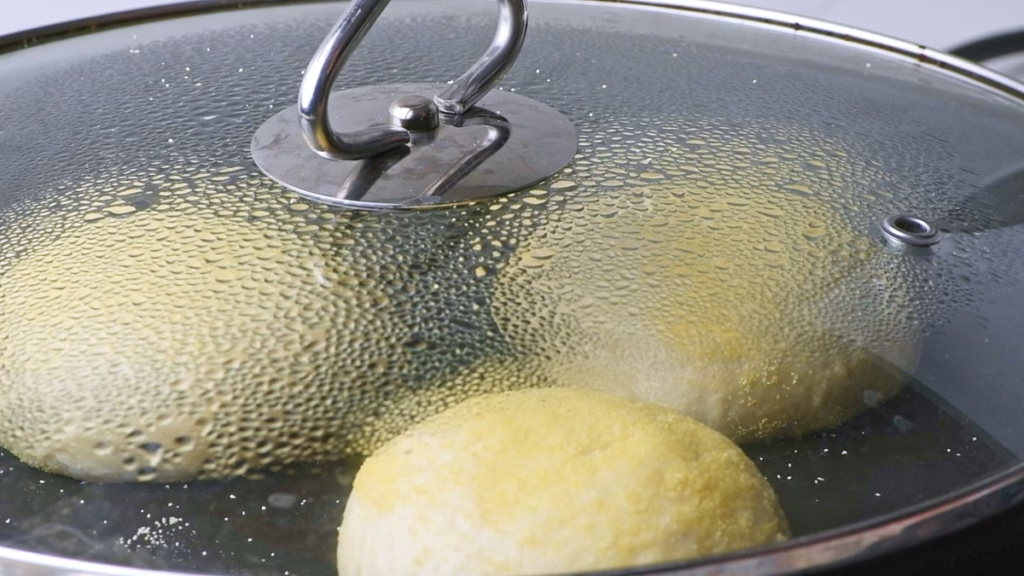


- Fry the muffins on the first side for about 8-9 minutes (check after 4. Your burner might run hotter!)
- Once they are light golden brown on the first side flip and fry on the other side for another 4-5 minutes.
- An instant read thermometer is a fabulous helper here. You’ll want the core temperature to reach 200°F/93°C
How to Serve

- To get that typical craggy English muffin style texture, use a fork to open them up, poking holes all around the sides, then gently pulling them apart.
- They are of course amazing fresh from the oven but really come into their own when toasted to crispy golden perfection, butter melting on top.

- These Protein English Muffins make a fantastic high protein breakfast topped with a fried egg, maybe some bacon and a bit of greens if you like (I sure do!)
- And we can’t forget their affinity for jam. With butter of course.
- My favorite way to eat them? Fresh and crispy from the toaster, with Nutella slathered on top, melting into chocolate-hazelnut heaven.
Hey, I never said I always eat healthy!
How To Store
- These Sourdough Protein English Muffins get only better in the fridge unbaked for about 3 days once shaped and kept in a plastic bag, making them the perfect meal prep breakfast, that you can freshly fry when you are hungry.
- Once fried, they will keep for up to 3 days in an airtight container on the counter or up to 5 days in the fridge.
- They freeze fabulously in a freezer proof container or bag. I would opt for splitting them open with a fork before freezing, so you can just toast them right from the freezer.
- To re-heat, open them by poking them gently with a fork around the sides and pull apart. Toast until golden and crispy to your liking. Enjoy warm with butter and jam or as breakfast sandwich.

FAQ
Technically, yes, but they won’t be “traditional” English muffins. Frying them on the stovetop is what creates that signature flat shape and slightly crisp crust. If you bake them (usually at 400°F for 12–15 minutes), they’ll look more like dinner rolls or buns. They’ll still taste great, but you’ll miss out on the classic English muffin experience!
Not at all! This is a high-hydration dough. The water content is what gives you those air bubbles (nooks and crannies). Instead of adding more flour—which will make the muffins dense—just keep your hands wet when doing the stretch and folds. Water is your best friend for handling sticky sourdough.
I highly recommend it. If you leave the curds whole, you’ll end up with little white pockets of cheese in your muffins. It doesn’t ruin the flavor, but it definitely changes the texture. Blending it with the water and protein powder ensures a smooth, uniform crumb that looks just like a traditional English muffin.
You can, but the timing will change. Active starter is at its strongest and will help the muffins rise much faster. If you use discard, your bulk ferment might take significantly longer (possibly double the time) because the yeast is “sleepy.” If you’re in a rush, stick to the active, bubbly starter. With “rush” being very loosely defined, considering sourdough simply takes time.
Protein powder—especially whey concentrate—is like a “super flour” when it comes to absorption. It sucks up moisture much faster than all-purpose flour. That’s why I’ve added the extra water and cottage cheese. If you swap to a different brand and the dough feels dry and stiff , add one tablespoon of water at a time, squishing it in with your hands, until it feels “jiggly.”
Since these are fried on a burner, it’s easy to brown the outside before the middle is done. The safest way to check is with an instant-read thermometer. You’re looking for a core temperature of 200°F (93°C). Once you hit that, they’re perfectly set and ready to cool.
Other recipes you might enjoy

Looking for more sourdough protein breakfast ideas?
Here are 13 of my most popular!
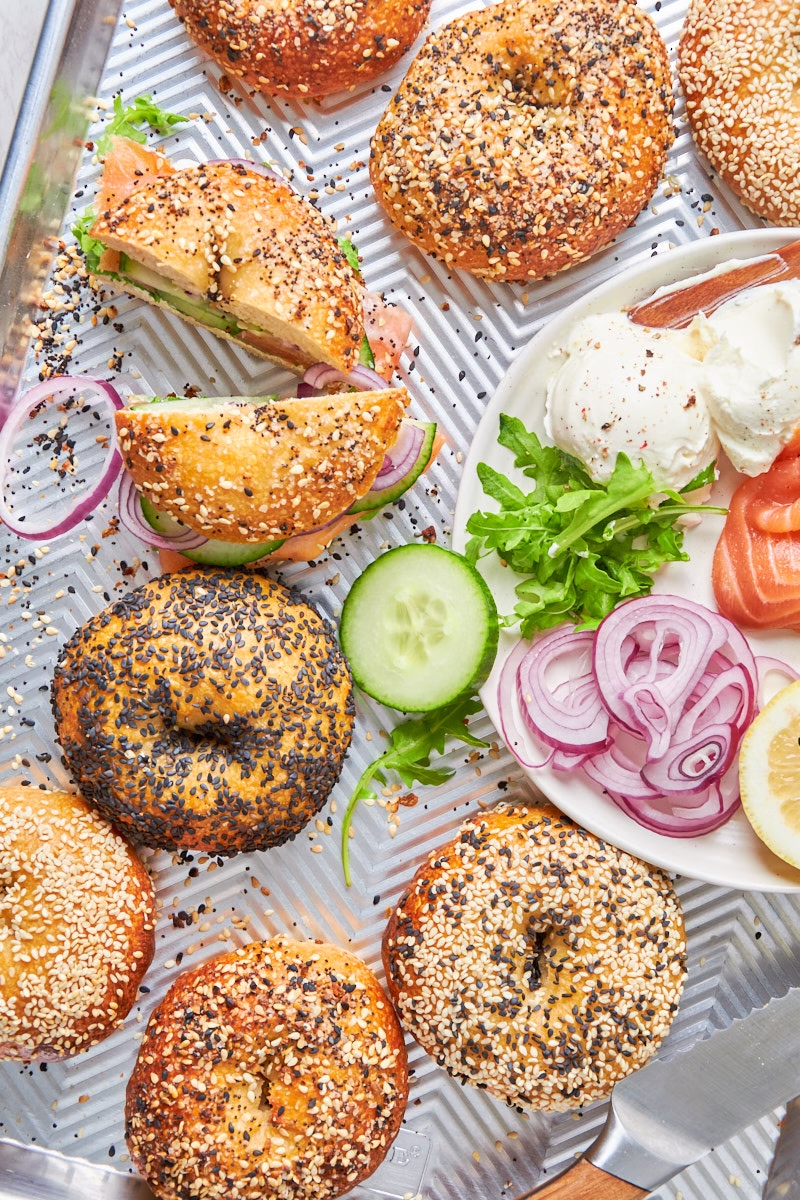
If you were a fan of the English muffins, I bet you’ll love these chewy & fluffy Soughdough Protein Bagels!
More of a sweet breakfast person?
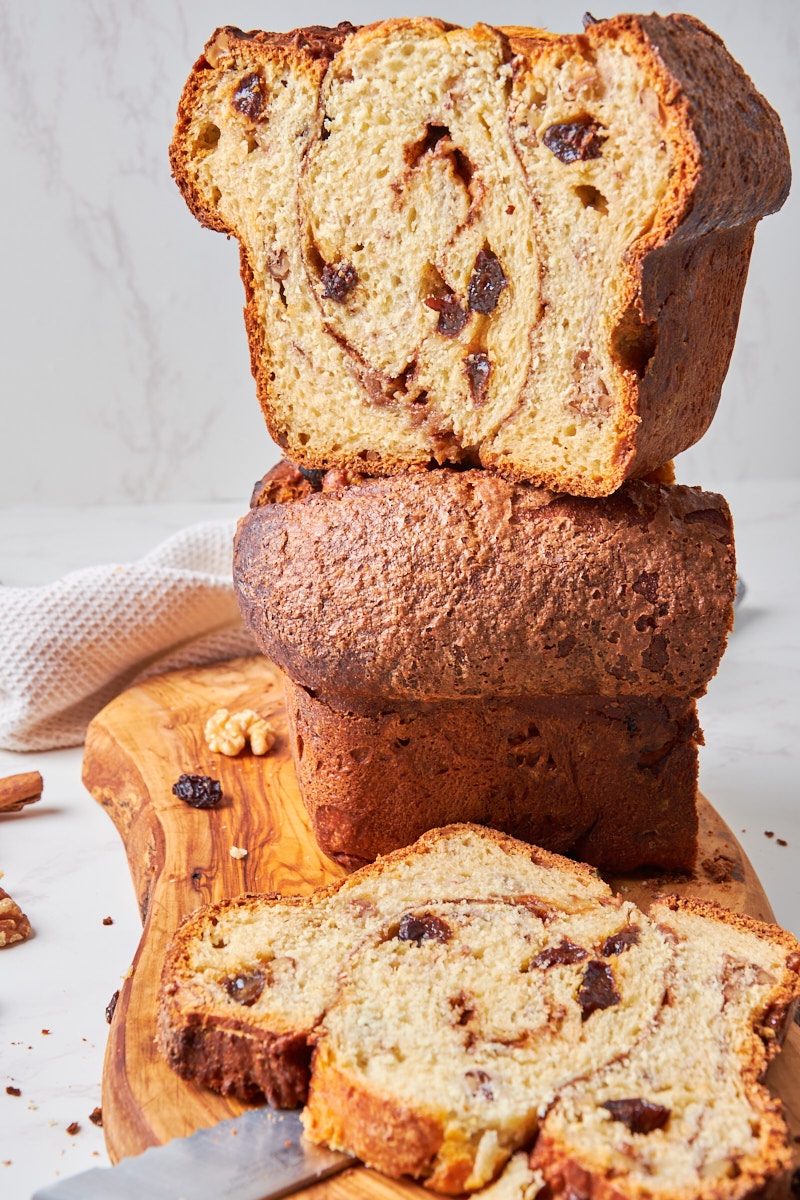
Try this deliciously fluffy Cinnamon Raisin Sourdough Protein Bread.

No-Knead Sourdough Protein English Muffins (10g Protein)
- Total Time: 31 hours 25 minutes
- Yield: 8 muffins 1x
Description
If you’ve ever tried adding protein powder to your baking, you know the struggle: you usually end up with something a bit dry and dense. These sourdough protein English muffins change that. By using a simple no-knead method and the natural moisture-retaining power of sourdough, you get a muffin that hits 10g of protein without losing those iconic nooks and crannies to collect the melting butter. They are chewy, tangy, and arguably better for toasting than a classic recipe.
Ingredients
Ingredients to make ½ cup (125 g) of Active Sourdough Starter
- 1 tbsp (15 g) sourdough starter
- 60 g all-purpose flour
- 3 1/2 tbsp (50ml) water
Dough Ingredients
- 1 cup (240 g) cottage cheese
- 1/4 cup+ 3 tbsp (110ml) water
- 1 tbsp (20 g) honey (sugar or maple syrup)
- 1/2 cup (60g) whey concentrate, unflavored
- 1/2 cup (100 g) active sourdough starter
- 2.5 cups (360 g) all-purpose flour
- 1 tsp (5 g) fine sea salt
- 1/4 cup (40 g) cornmeal (for sprinkling)
Instructions
Day 1 – Feeding Your Starter (Levain)
Sourdough Starter (Levain)
- Using 15g (about 1 tbsp) of your existing starter (Levain), feed it with 60g (1/2 cup) flour and 50ml (just under ¼ cup) water. Leave it loosely covered overnight until it has doubled in volume, is active, and bubbly.
- If you have no starter yet, here is a link on how to make your own. You just need water and flour.
- How strong your starter is depends on your flour. Use good quality flour to feed it for best results. The consistency should be like very thick, stiff pancake batter.
- How long your starter will take depends on the temperature of your house. In winter it might need longer, in summer significantly shorter.
- To determine if it’s ready check if it has doubled in volume, is actively bubbling, you see nice, strong gluten strands if gently pulling it away from the walls of the jar with a spoon.
- If yours seems too runny, add a bit more flour, until it gets harder to stir and leave for a few more hours.
Day 2 – Mixing The English Muffin Dough/Bulk Proof
Mix The High Protein Dough
- Check if your sourdough starter is ready by adding a dollop of it to the water. If it floats and is nice and bubbly, it’s ready. Ideally it should just have formed a bit of a dome in its jar, when at peak activity. Though if it just collapsed a bit you’ll be fine too.
- Blend the cottage cheese, honey and protein powder with the water until smooth.
- Add the cottage cheese-protein mix to the sourdough starter and stir until combined.
- In a large bowl mix the salt into your flour.
- Pour the liquids into your flour and stir until you have a shaggy dough without any dry flour bits.
- Your dough will be very wet and sticky at this point. Don’t add more flour. This is working as intended.
- Cover with a lid, plastic wrap, a shower cap or a damp tea towel and let it sit for about one hour.
Stretch And Fold
- After the first hour, start a series of 3-4 stretch and folds.
- To do this without too much dough on your fingers, wet your hands lightly.
- Push both hands under the dough, pulling it upwards. Then fold it over itself.
- Turn the bowl 90 degrees and repeat. Do this 4 times until the bowl returns to its starting position and the dough is visibly smoother and stronger.
- Repeat every 30 minutes to 1 hour for 2-4 times or until your dough looks smooth and strong.
Bulk Ferment
- Allow your protein muffin dough to bulk ferment on the counter for 4-6 hours or until it looks visibly risen and puffy. You should see little bubbles on top and if you used a glass bowl, even more on the sides.
Overnight Fridge Ferment
Now you have two options:
- You can cover your dough and store it in the fridge overnight for a slow fermentation (8-12 hours, or even up to 3 days if you prefer a stronger sourdough flavor or life gets in the way of baking) and shape about 2-3 hours before you want to fry your English Muffins.
- Or you can do what I did and go straight to the shaping, allowing them to overnight ferment while shaped.
Shaping The Protein English Muffins
- Line your sheet pan with baking parchment and sprinkle with about 2 tbsp cornmeal.
- After the overnight fermentation (or right after the bulk ferment, if you want to fry them first thing in the morning) take your dough out your bowl using a dough scraper onto your floured worktop.
- Shape it into a neat ball by doing a “letter fold” to start giving it a bit of tension. For that, stretch the dough gently into a rectangle, fold one third over the center, then the other, essentially ending up with something like a very rough letter shape.
- Then fold it again starting from the short ends, until you have a square with a good bit of surface tension. Pushing the side of your hand or your dough scraper underneath it while rotating against the work surface, shape into a ball. This doesn’t have to be perfect.
- Use your dough scraper or knife to cut it in half, then quarters, then eight pieces.
- Pat each portion down gently with your fingertips, then grab the corners and pull them up, creating a sort of bag/dumpling shape
- Turn it seam side down on your hand or work surface (very little to no flour, so it can get traction), cup your other hand over it and start rotating in small circles until you have a neat ball and the seam at the bottom is mostly closed.
- Gently place the shaped muffins, seam side down, on your cornmeal sprinkled baking parchment. Leave a little room between them, as they will puff up a fair bit. I got all 8 onto one sheet pan.
- Sprinkle the tops with the remaining cornmeal and gently flatten them a bit with your palm.
Cold Ferment/Last Proof
- I put my sourdough protein muffins in the fridge overnight at this point and since I don’t want them to dry out and form a skin, which might bake into a very hard crust later, I use a bit of a trick to keep them moist and in perfect shape while giving them time to rise.
- I found towels decidedly too drying (even when damp) and frustratingly sticky and plastic wrap, no matter how carefully I tried to seal it always had air gaps, leading to dry bits plus was too tight to give my baguettes enough room to expand.
- Hence I started using (clean) large plastic bags, which works marvellously!
- Push said tray or pan into a large clean plastic bag, blow a bit of air into it, so it puffs up over the muffins and close it with a clip or knot, to get a relatively airtight seal.
- Move into the fridge and allow to cold ferment/proof for at least 8 hours, to get the full flavor. Up to 3 days works perfect, after that they start to deflate a little.
Day 3 – Frying Your Sourdough English Muffins
- Pre-heat a non-stick frying pan that you have a lid for on low heat. My ideal induction stove setting was 5 out of 9, but you might have to experiment a little to find the exact right one on yours.
- Fry the muffins on the first side for about 8-9 minutes (check after 4. Your burner might run hotter!)
- Once they are light golden brown on the first side flip and fry on the other side for another 4-5 minutes.
- An instant read thermometer is a fabulous helper here. You’ll want the core temperature to reach 200°F/93°C
Notes
How to Serve
- To get that typical craggy English muffin style texture, use a fork to open them up, poking holes all around the sides, then gently pulling them apart.
- They are of course amazing fresh from the oven but really come into their own when toasted to crispy golden perfection, butter melting on top.
- These Protein English Muffins make a fantastic high protein breakfast topped with a fried egg, maybe some bacon and a bit of greens if you like (I sure do!)
- And we can’t forget their affinity for jam. With butter of course.
- My favorite way to eat them? Fresh and crispy from the toaster, with Nutella slathered on top, melting into chocolate-hazelnut heaven.
- Hey, I never said I always eat healthy!
How to Store
- These Sourdough Protein English Muffins get only better in the fridge unbaked for about 3 days once shaped and kept in a plastic bag, making them the perfect meal prep breakfast, that you can freshly fry when you are hungry.
- Once fried, they will keep for up to 3 days in an airtight container on the counter or up to 5 days in the fridge.
- They freeze fabulously in a freezer proof container or bag. I would opt for splitting them open with a fork before freezing, so you can just toast them right from the freezer.
- To re-heat, open them by poking them gently with a fork around the sides and pull apart. Toast until golden and crispy to your liking. Enjoy warm with butter and jam or as breakfast sandwich.
- Prep Time: 1 hour
- Levain/ Fermentation/ Rising Time: 30 hours
- Cook Time: 25 minutes
- Category: Breakfast
- Method: Baking
- Cuisine: American






No Knead sourdough protein English muffins are delicious. I have made it twice already I am going keep it in my menu.
Oh good, that makes me happy to hear. 🙂
These sourdough protein English muffins look like such a win. You still get all the classic nooks and crannies, plus a solid protein boost that makes them even more satisfying.
Thank you, they really are! 🙂
I’ve always wanted to make English muffins but they’ve intimidated me. I’m so glad I gave this recipe a try. They turned out great and the added protein was a bonus.
Oh good! I’m so happy it worked for you and removed the hesitation around making them yourself. 🙂
Thanks for letting me know!
Love that this English muffin is protein-rich and keeps you full. It was easy to make with the detailed step-by-step instructions here, and it tasted great when toasted and had with a little jam on the side.
Thank you, so happy to hear that!